Painting Coastal Light: How Light Changes Across Sky, Water and Shore
In this seascape oil painting, I followed one passage of golden light as it changes character across vaporous clouds, moving ocean water and reflective wet sand.
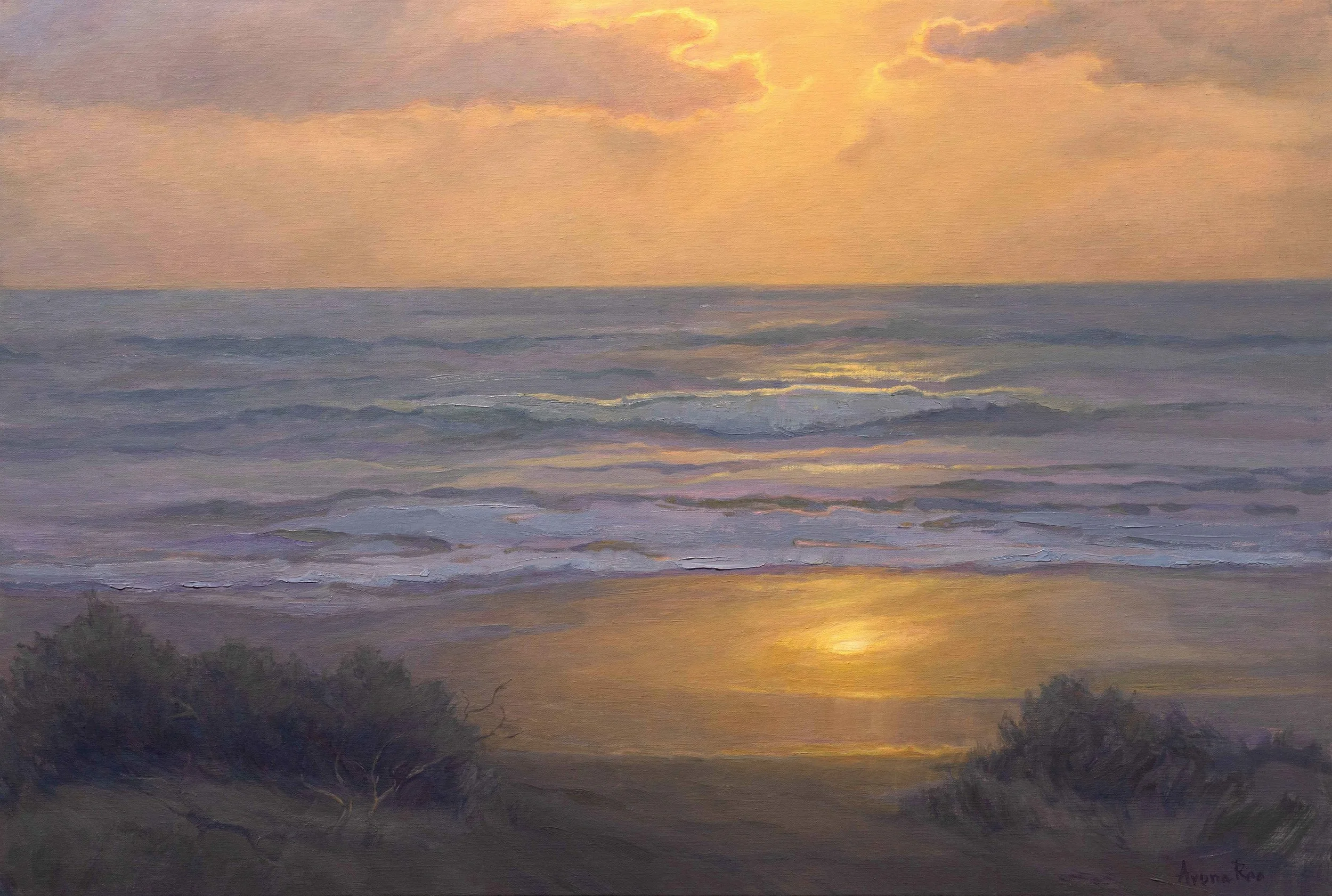
Where the Light Settles — Oil on linen, 24 × 36 inches
Coastal light is usually not a static phenomenon.
In the sky, it can dissolve into vapor. Across moving water, it breaks apart into flickering passages of light. When it reaches wet shore, it can become quieter again—broad, smooth and almost mirror-like.
That changing character of light became my muse in Where the Light Settles.
Light Diffused by Vaporous Clouds
The sky, which looks deceptively simple turned out to be one of the most challenging and time consuming aspects of this painting. Because the effect I was after was light diffusing through vaporous clouds and rendering that meant working within a very narrow, delicate range of values and edges.
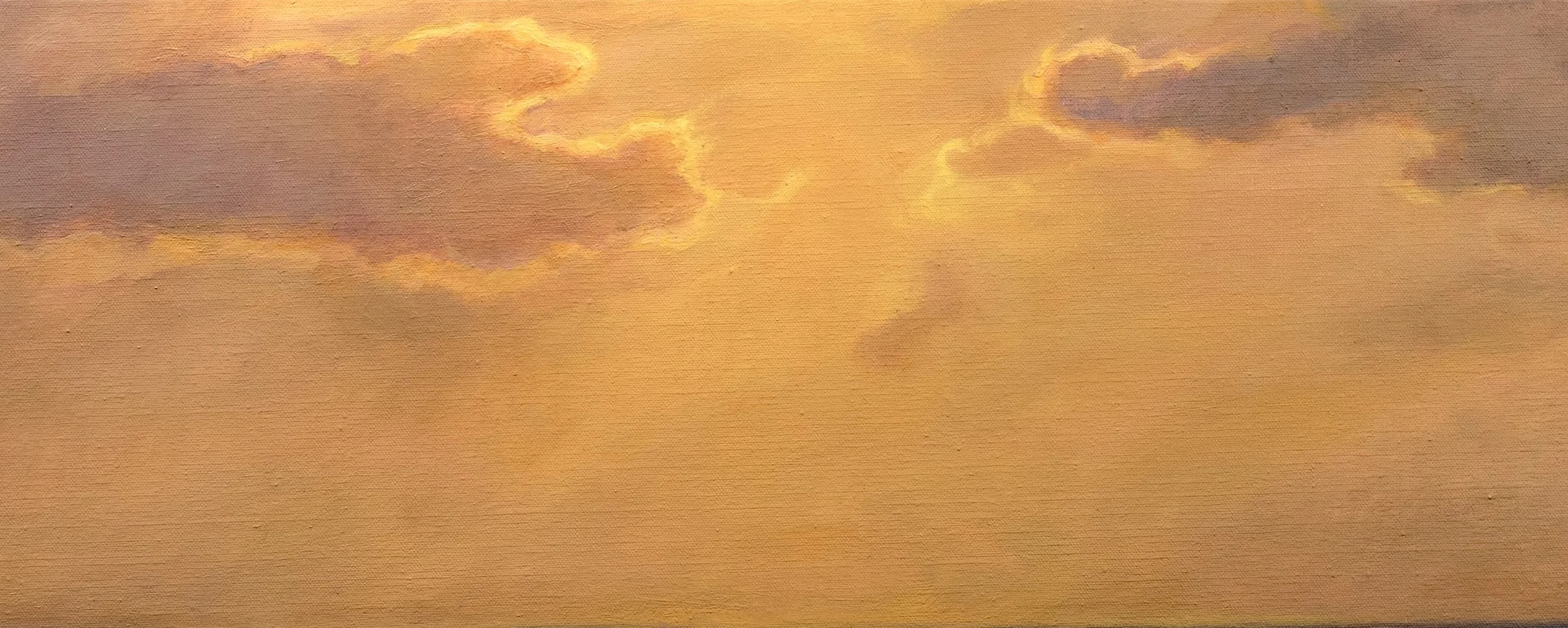
Cloud and Sky Space
I develop this kind of vaporous light through multiple layers. I gradually build the cloud forms over earlier passages of color, allowing some to remain visible while others are softened, covered or reintroduced. Those overlapping layers help warm and cool notes move through one another and give the atmosphere that translucent depth.
The challenge is keeping that softness without losing structure. I work with lost-and-found edges—allowing a cloud to become briefly defined, dissolve into the surrounding sky, and then emerge again. Even the illuminated edges are kept within that atmosphere, using warm color rather than stark whites.
For me, diffusion isn't the absence of structure. It's structure appearing and disappearing within atmosphere.
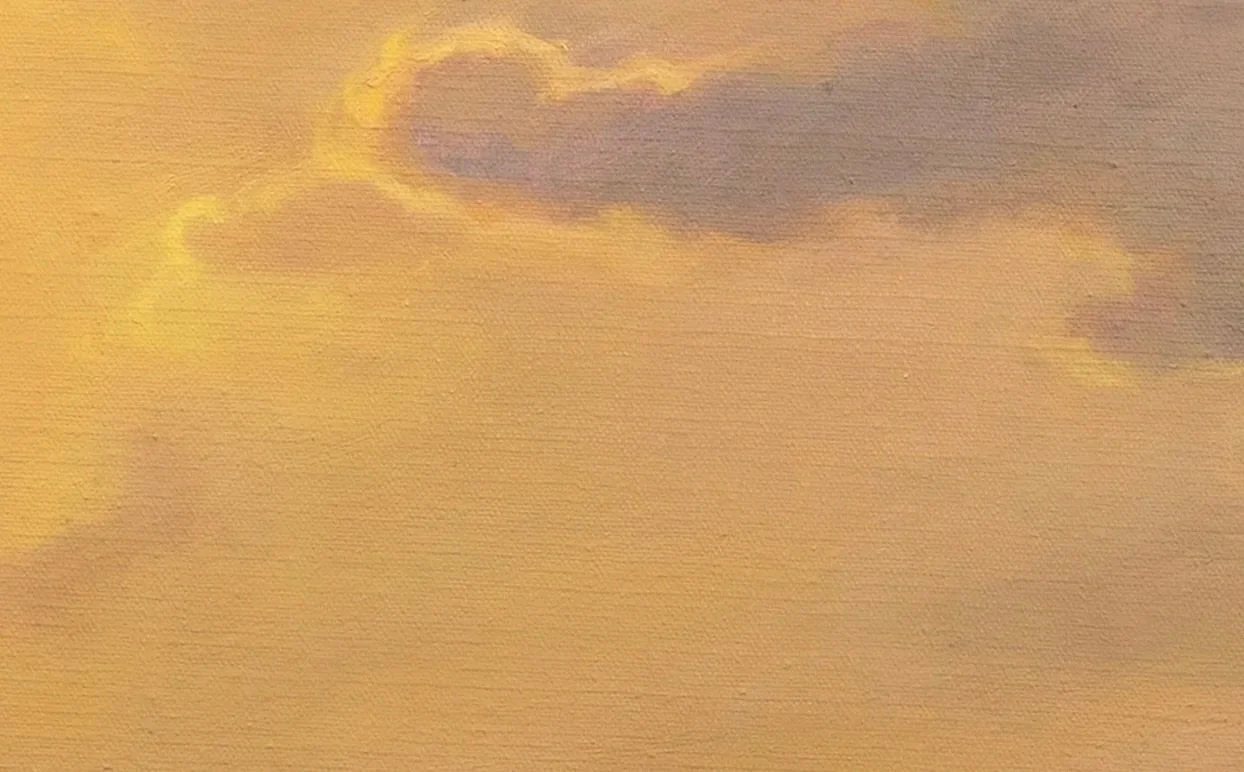
Across the Sky, Light is Diffused
Light Fractured by Moving Water
Across ocean wave crests, the physical character of light changes completely. The sky diffuses light. The ocean fractures it.
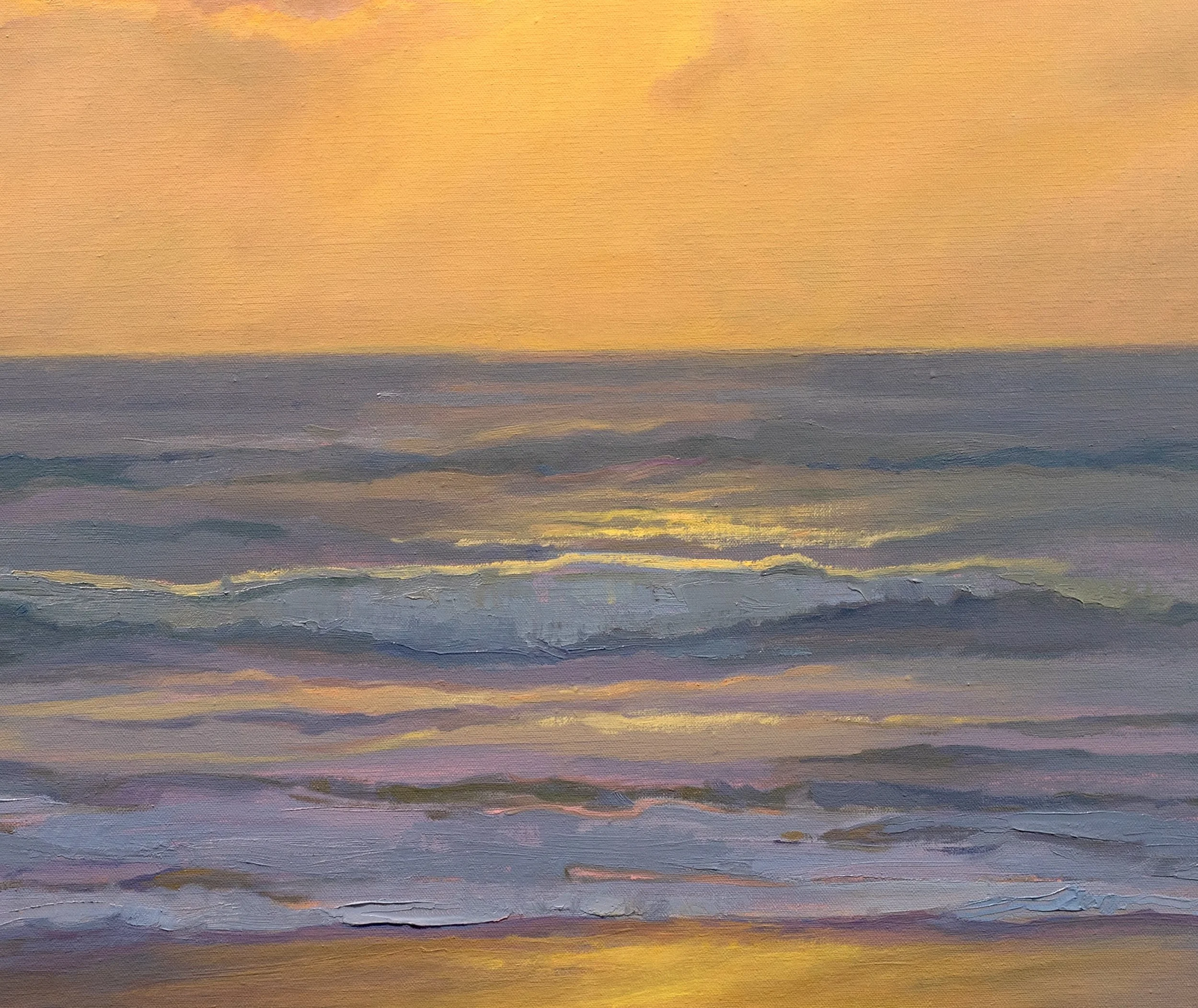
Across Ocean Waves, Light Breaks Apart
While the sky needed subtle layering and careful attention to very small shifts in value, temperature, and chroma, the ocean required more physical paint, broken marks, and greater surface variation because the light is continually interrupted and redirected by moving water. I used a palette knife in places to suggest the visceral quality of wave crests and glints of light. Compared with the sky, these larger shapes with their clearer structure were much easier to resolve.
This painting reinforced for me that the difficulty of a passage isn’t always technical—it can be observational. The sea can look more complicated because it contains so many marks, reflections, edges, and textures. But its underlying structure makes it easier to resolve. The sky, while seemingly simpler, demands more acute observation because you are judging extremely small relationships in value, temperature, chroma, edge, and transition. The challenge is seeing how little needs to change, and exactly where.
Light Mirrored Onto Wet Sand
As the light reaches the shore, the handling changes once more. After the broken movement and texture of the ocean, I wanted the wet sand to feel broader and quieter—almost mirror-like in places.
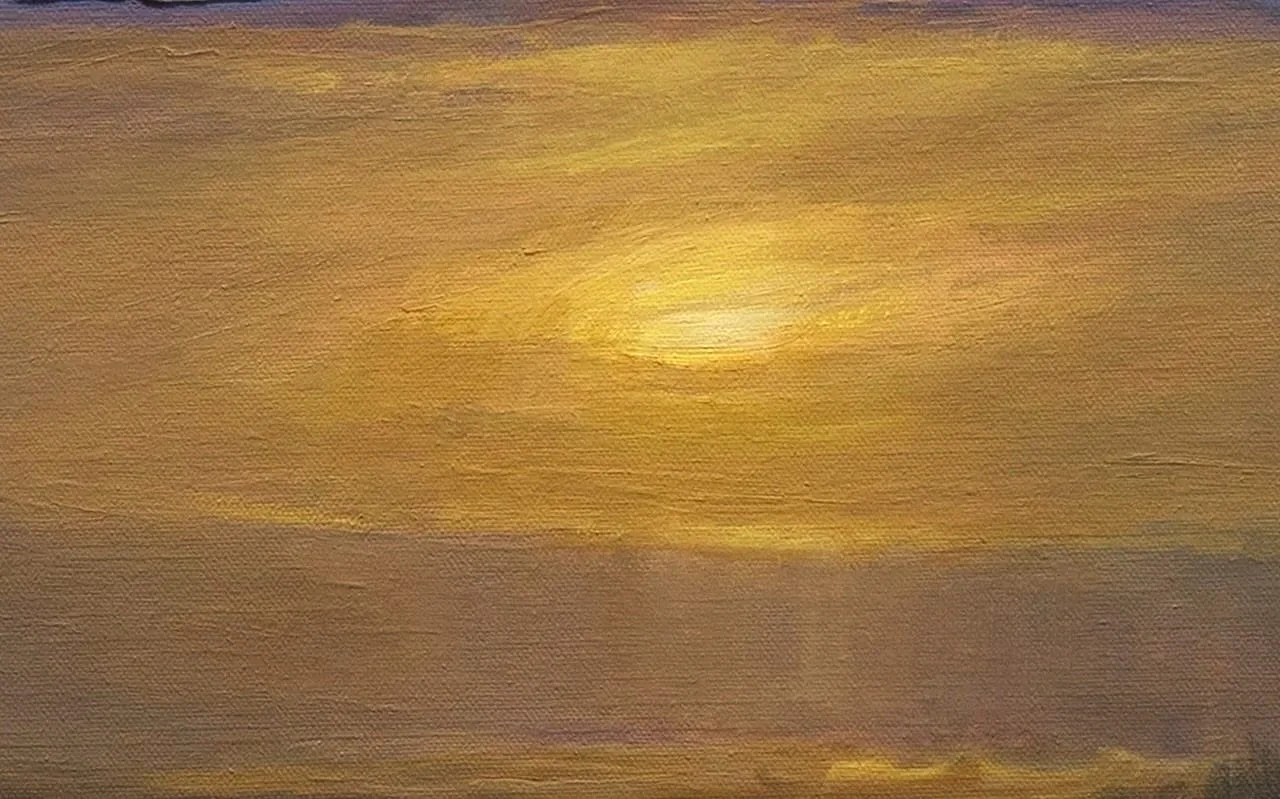
Pool of Golden Light
It was tempting to describe more of the shore: ripples in the sand, small reflections, variations in the wet surface. But too much information here would have competed with what interested me most—the way the gold seemed to spread and settle across an otherwise quiet plane. So I deliberately kept the surrounding texture restrained, allowing subtle shifts of color and value to suggest the wet sand without fragmenting the luminous effect. The goal here was to make the reflected light feel embedded in the sand rather than painted on top of it—to let the luminosity spread gradually through the wet surface.
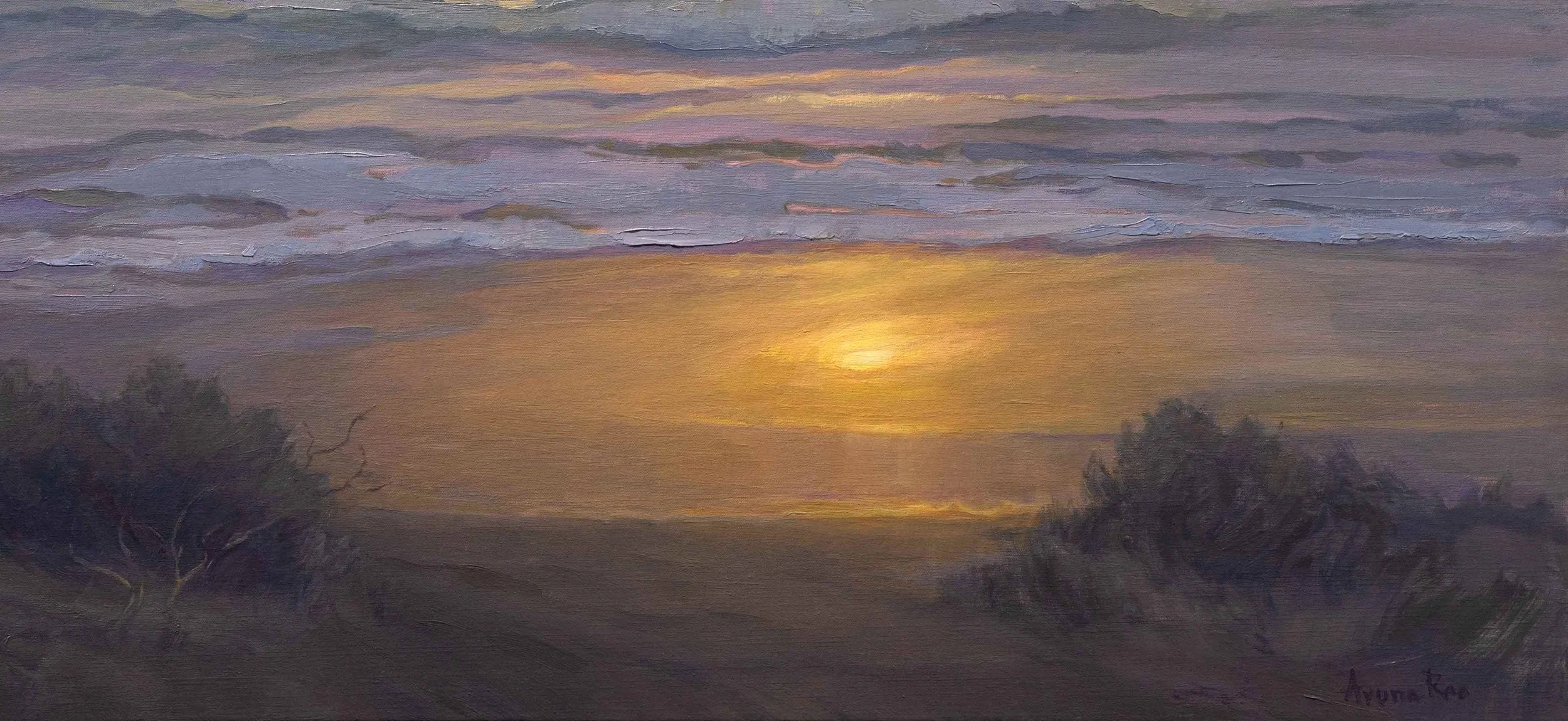
Across Wet Sand, Light Gathers and Pools
One Light, Many Surfaces
One of the challenges in Where the Light Settles was creating unity without painting every part of the landscape in the same way. Each surface asked for a different kind of handling: vaporous clouds, broken and physical water, smoother luminous sand, and more substantial foreground vegetation.
Rather than trying to make the brushwork consistent throughout, I let each surface respond differently to the same light. What I think holds them together is the color harmony and the sense of light permeating the landscape, moving seamlessly from one plane into the next.
But what interested me most about this scene was where that journey ultimately ended. The sky begins the story, but it doesn't finish it. The light emerges through the clouds, flickers across the moving ocean, then travels toward us until it comes to rest on the wet sand between the dark coastal foliage.
The foreground usually anchors a landscape, leading our eye into and beyond it. Here, it does something different: the foreground itself becomes the focal point and the ultimate destination of the light.
And that is what primarily drew me to paint Where the Light Settles.
See how the light, broken marks, and surface texture come together in this short reel of the finished painting on my easel—
