When the Story Lives in the Silence: The Power of Absence in Coastal Landscape Painting
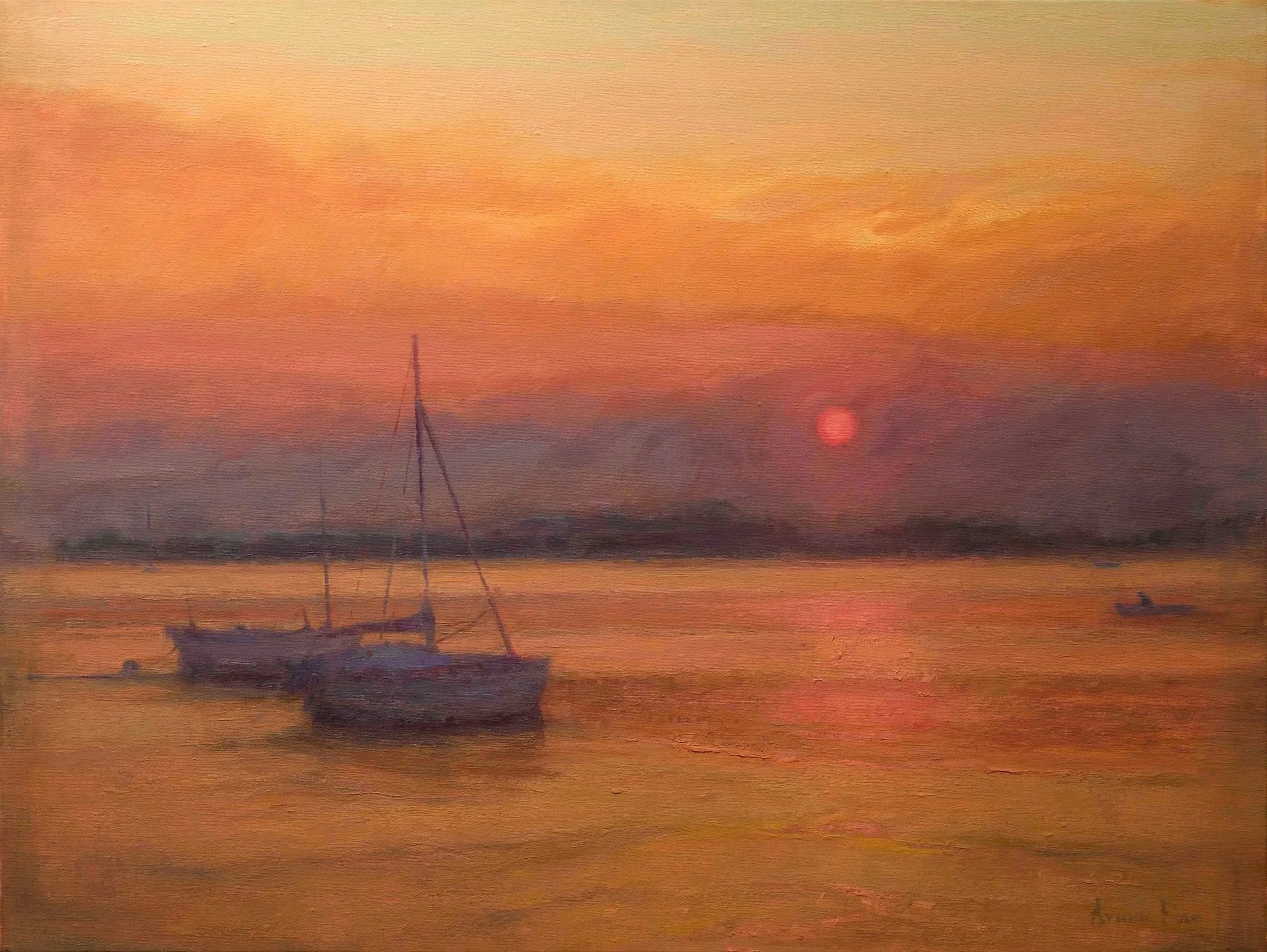
When the Story Lives in Silence
Some paintings tell you everything.
The wave breaks. The storm arrives. The figures move through the scene with clear purpose, and the narrative lands complete, like a sentence that ends with a period. They are powerful and beautiful in their own way.
But the paintings I find myself returning to—the ones that seem to deepen with time—refuse to resolve and explain everything. They withhold, not carelessly, the way an unfinished thing withholds, but deliberately, the way a good storyteller chooses what to reveal and what to leave unsaid..
I've been thinking about this more lately because it describes something at the heart of what I'm trying to do with my work.
These coastal shimmer paintings are an exploration of atmosphere, reflective air, and the quieter side of coastal light.
The Boat, the Dock, the Moment After
Done for the Day was inspired by a boat resting beside a dock as evening settles over the harbor.
Except for me, it wasn't just that.
The boat is there. The fading light is there. The cabin windows glow with that particular warmth that suggests someone has already been and gone. But the people who worked the lines, read the weather, and brought the vessel home are nowhere in the frame.
And that's the feeling I wanted to paint.
Not in what you see, but in what you sense just beyond it. The line already tied. The engine already quiet. The boathouse light switched on as twilight settles in. The moment you arrive is the moment after theirs.
There's something about that small gap that feels emotionally true. We've all arrived just after something has ended. We recognize that particular quality of light and air—not because we've seen this exact harbor, but because we've lived moments like it.
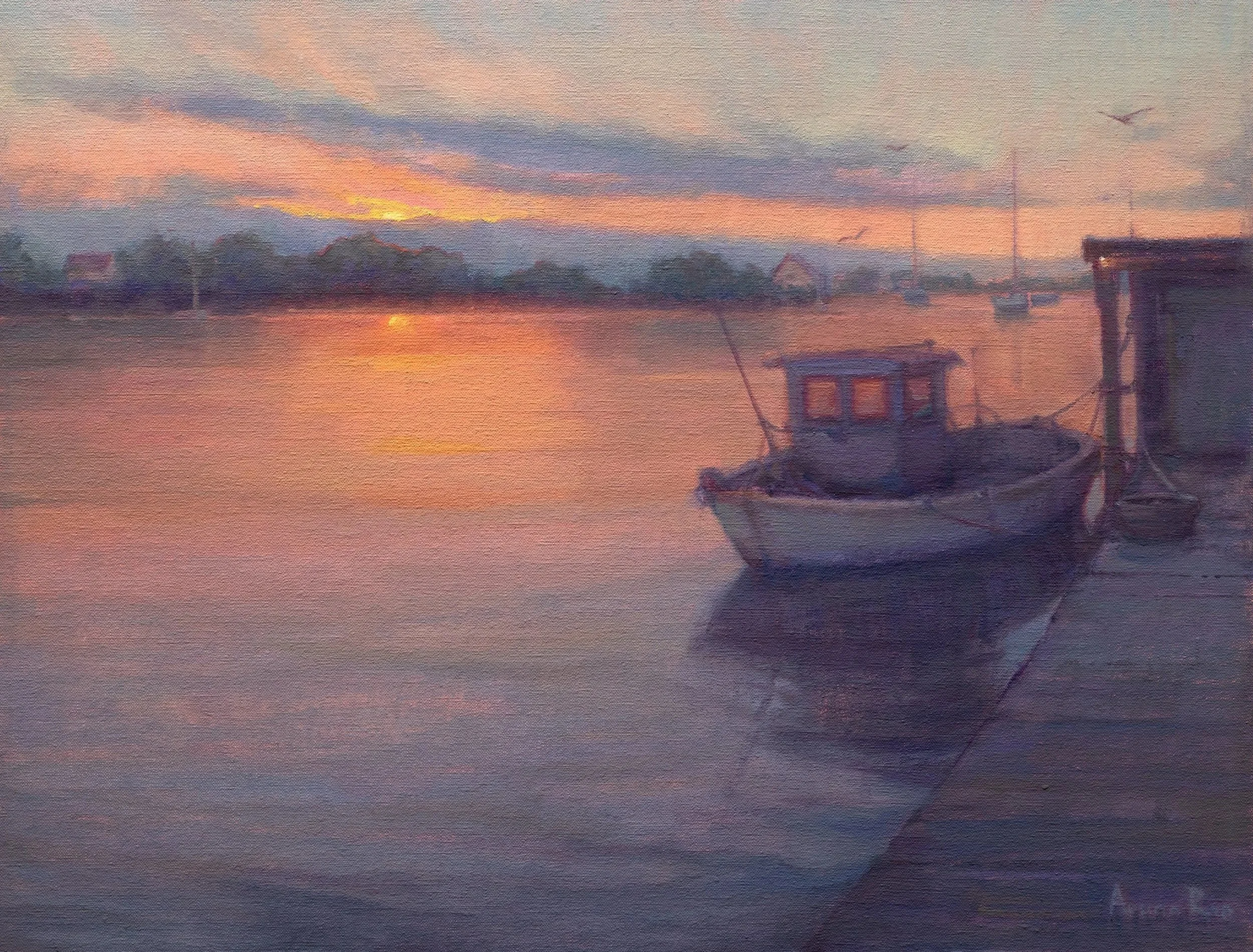
Done for the day - 18 × 24 in, Oil on Linen
The Harbor Before It Wakes
In Wake Up Call, it’s a mooring at the break of dawn than actual morning. A sailboat rests at anchor on still water. The harbor hasn't stirred, but first signs of dawn have started to appear.
Yet standing in front of this scene, what I feel most strongly is imminence. Everything is about to begin. The particular suspension of a world that hasn't yet decided what it will become.
I tried to render this painting in a minimalistic, almost abstract way. The temptation is always to add — another detail, another note of activity. But, what I want instead is for the painting to stay open, the way early morning stays open before the day makes its demands.

Wake Up Call - 18 × 36 in, Oil on Linen
The Moon That Doesn't Explain Itself
The hardest kind of absence to paint is the kind that has no clear narrative explanation.
Lavender Moon is like that. A full moon lifts above the treeline while distant boats settle into dusk on the water below. Nothing is missing in the conventional sense. The scene is complete.
And yet.
There's a quality I can only describe as unreachability. The shoreline doesn't quite resolve. The boats are too distant to read. The moon hangs in that low, heavy way it does when it feels close and impossibly far at the same time.
What gives the scene its quiet strangeness is that it refuses to be entered fully.. You can look at it. You can feel it. But you cannot quite arrive there.
That resistance — familiar yet out of reach — is where imagination lives. And imagination, I've come to believe, is what makes a scene mean something personal to the person standing in front of it.
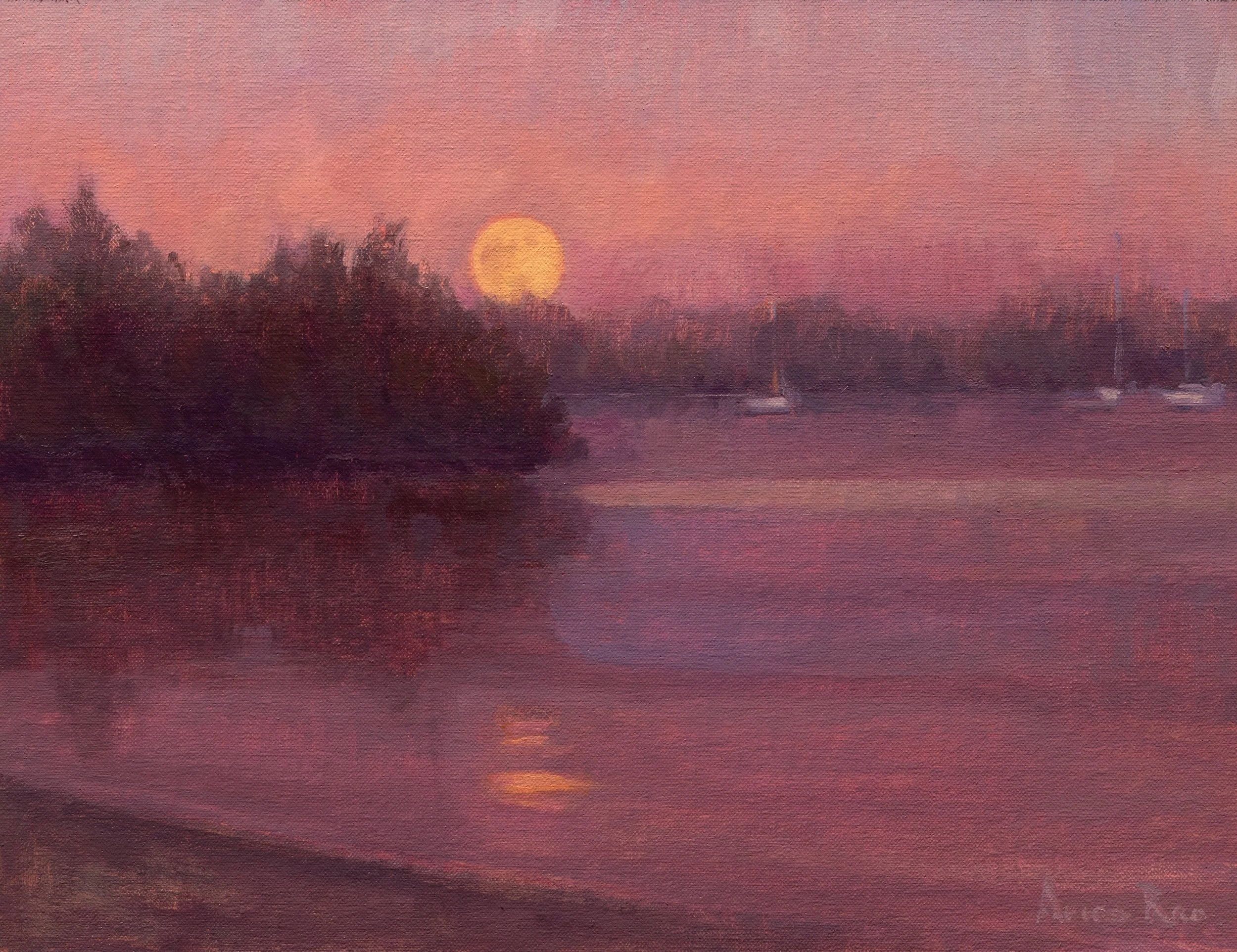
Lavender Moon - 12 × 16 in, Oil on Linen
What Memory Knows
Some of the moments in nature that stay with us longest are the quiet ones. The light still on in a window across the water. The harbor after the boats come in. The particular stillness of the coast during those threshold moments - at dawn and dusk.
These moments resonate because they work the way memory works — not in complete narratives, but in atmosphere and fragment and feeling. We remember what a place was like more than what precisely, happened there.
That's why paintings built around absence can sometimes reach a more personal place within us.
It doesn't tell you what to feel. It offers a shape, a light, a threshold moment — and trusts you to bring the rest.
What looks like withholding is, I think, an invitation.
The painting ends. The story doesn't.
